Leaks rarely start where they finish. Water may show up on a ceiling twenty feet from the source, and by the time a homeowner notices a stain, the leak has already carved a path through layers of wood and insulation. After two decades in the trade, a pattern is clear. Most leaks trace back to the same repeat offenders, and the difference between a minor Roof repair and major interior damage often comes down to whether the original Roof installation paid attention to the quiet details.
What follows is hard-earned perspective from service calls on all kinds of roofs, from modest bungalows with three-tab shingles to complex custom homes with standing seam metal. The materials change, the physics does not. Water seeks the path of least resistance, and it will exploit any oversight.
Why leaks happen more than they should
Roofs fail for only a handful of reasons. Materials age. Weather stresses weak points. Building movement opens seams. But the most common reason a roof leaks within the first third of its life is installation detail. In my experience, a majority of non-storm service calls, often six out of ten or more, tie back to flashing errors, skipped sealant steps, or inadequate overlap. You can choose any reputable Roofing company and still get bit if the crew in a hurry treats flashing like an afterthought.
Another factor is design. Beautiful roofs sometimes ask materials to do things they were not intended to do. Short overhangs, low slopes paired with shingles, long valley runs that feed into inside corners, all of these create zones where water volume or wind pressure is higher. Good Roofing contractors anticipate these risks. The best ones adjust details and underlayments accordingly, even when the plan set is silent.
It helps to separate leaks into two buckets. One is acute damage, such as a broken shingle from a fallen branch or a wind-lifted ridge cap. The other is chronic failure, the slow work of capillary action at a poorly detailed joint. Acute damage is usually obvious and cheap to fix if caught soon. Chronic failure is the budget killer because it hides until a ceiling mark gives it away.
The top five leak sources, and what sets them off
1) Flashings around penetrations and walls
If you only remember one section, make it this one. Ninety percent of roof design is about managing the joints. Flashing is the language joints speak.
At any place where roofing meets something else, like a vent pipe, chimney, skylight curb, dormer wall, or a vertical siding return, layered metal or membrane flashing creates a shingled path for water to escape. When that layering is wrong, water sneaks behind the roof covering.
Common failure points I find on service calls:
- Pipe boots that have cracked at the neoprene collar after ten or so years. Sun and ozone harden the rubber. On warm days you can see a hairline gap around the plumbing vent, a perfect ring for water to track. Sidewall flashings that rely on surface sealant instead of proper step flashing. On some tear-offs I still find long L flashings run under multiple shingle courses. When wind drives rain sideways, water jumps the single L and heads into the wall sheathing. Counterflashing at chimneys that is caulked to brick rather than cut into mortar joints. Caulk dries, mortar moves, and one season later the gap opens. Correct practice is to reglet cut and insert counterflashing with mechanical retention, then seal. In low-slope to steep-slope transitions, especially where a porch roof meets the main wall, crews sometimes forget a kickout flashing at the bottom of the siding. Without the kickout, water rides the wall and spills behind the gutter into the soffit. Years later the fascia is soft and the interior corner shows staining.
Fixes vary by material. On asphalt shingles, a Roofer will replace damaged step flashings and reweave them with new shingles. On metal roofs, we fabricate or order closures that match the panel profile and use butyl tape where sealant alone once sat. For tile, the headlap and pan flashing geometry matters more than the tile count. In every case, we avoid relying on caulk to mask poor layering. Caulk is a maintenance item, not a substitute for shingle logic.
A note on building movement. Houses breathe. Seasonal expansion compresses and pulls. A tight flashing today can gap slightly next year. That is why we hem metal edges where we can, allow telescoping slip joints at long wall flashings, and choose sealants with proper elongation ratings, typically 25 to 50 percent.
2) Valleys and roof-to-roof transitions
Valleys collect water. In a heavy storm, thousands of gallons can race down a single valley in an hour. That volume magnifies small mistakes.
On open metal valleys, leaks often track to nail placement. I still see nails driven too close to the valley centerline, undercutting the rule of keeping all fasteners at least 6 inches away from the valley crease. In winter climates, ice can form a dam at the valley bottom, and water migrates sideways under the shingles. An ice and water barrier beneath the valley protects against this, but its absence is common on older homes.
On woven or closed cut shingle valleys, improper trimming creates reverse laps. During a wind-driven rain, the cut edge becomes a scoop. I have photographed valleys where one wrong cut let water wick uphill 3 to 4 inches, then sideways into the underlayment seam. The homeowner only noticed after a brown line appeared on the bedroom wall, directly under the valley.
Low slope transitions cause their own trouble. Where a shallow porch roof joins a steeper main roof, the flow slows down over the shallow section and tends to back up. This calls for an extended width of ice and water shield, sometimes 36 inches on each side of the valley, and careful planning of the shingle layout to avoid stacking end joints.
If you have a metal roof, panel end laps near valleys are suspect. If the panels do not carry past the valley intersection with enough overhang, or if the end lap sealant has failed, capillary action can pull water up and under the lap in a driving rain. On flat membranes, especially aged modified bitumen, look at valley transitions where scuppers feed water from one plane to another. Blisters and open seams here are frequent culprits.
3) Aging shingles, nail pops, and impact damage
Shingles do not fail all at once. They dry, curl at the corners, lose granules, and shrink. As they shrink, joints that were once tight open up. When two adjacent shingles both lose a little length, the exposure increases and the butt joints can line up. That is a recipe for a small leak during a slow, soaking rain. It may not leak during a thunderstorm because the downpour runs off quickly. During a steady drizzle that lasts all day, water lingers and finds the new, larger capillary paths.
Nail pops are another common find. A nail that did not hit solid sheathing or was overdriven can back itself out with thermal cycling. The shingle lifts slightly, and the raised nail head becomes a pinhole outlet right through the mat. On a sunny day, you might see a small hump in the shingle. In a light rain, a teaspoon of water per minute can drop through that one mistake into a bathroom ceiling. I have fixed leaks where two nail pops caused hundreds of dollars in drywall and Additional resources paint.
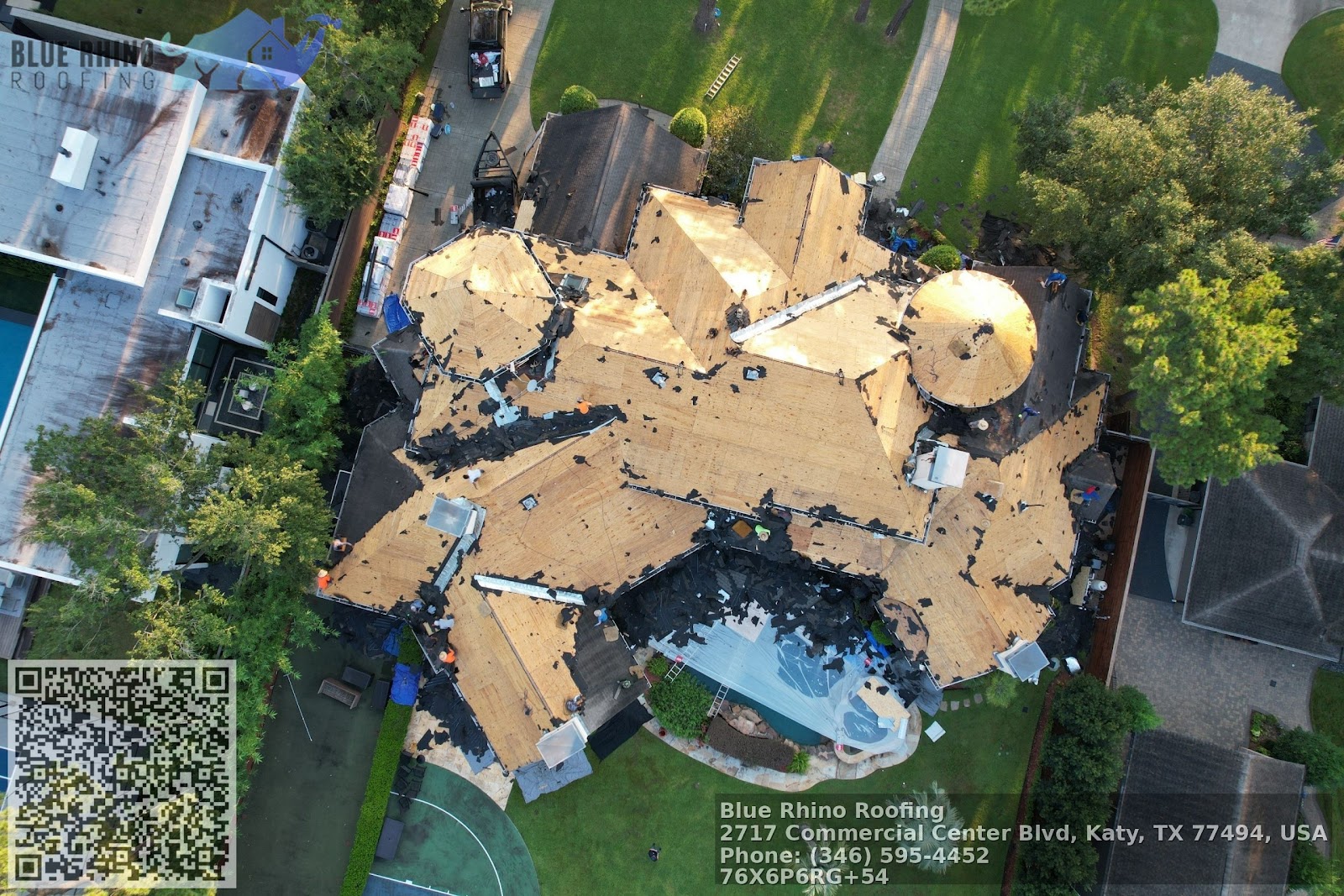
Hail complicates the picture. Moderate hail that does not punch through can still bruise the mat and loosen granules. The bruise is a weak spot that weathers faster. Two or three years later, those circles become bald, and the organic mat is exposed to UV. Tiny cracks form and you get a seep. Many homeowners do not connect a slow leak in year four with a hailstorm they barely remembered.
On cedar shake or slate, aging takes a different shape. Cedars split along the grain. When splits align across courses, water can track through aligned gaps. Slate can delaminate or slip if fasteners corrode. On both, walking by an untrained person breaks brittle pieces, creating leaks that were not there yesterday. If you own one of these roofs, restrict foot traffic and use roof ladders or planks when a Roofer must access the field.
There is a judgment call on when to patch and when to plan for Roof replacement. If more than 20 to 25 percent of the field shows widespread wear indicators, chasing individual leaks becomes a temporary strategy. A reputable Roofing contractor will show you photos, mark areas of concern, and, importantly, talk about timing so you can budget. It is not always about selling a new roof. If your underlayment and decking are still solid, and you are planning to move in two years, strategic repairs might be the smarter choice.
4) Skylights and roof windows
Skylights are wonderful for light and something of a headache for water. They combine four risk factors in one assembly: a curb or frame penetration, glass seals, moving parts if they vent, and a long perimeter where flashing must tie into shingles, tile, or panels.
Factory flashing kits have improved over the years. Older units, particularly those installed before about 2010, often used foam gaskets and asphalt-impregnated tapes that do not age well. We see two main leak modes:
- Perimeter flashing failure, where step flashings or apron pieces are missing, undersized, or flattened. In heavy wind, rain can blow up and under the shingle tie-ins. If there is no secondary water barrier on the deck around the opening, the leak shows up as staining on the drywall shaft. Glass seal failure, where the insulated glass unit loses its edge seal. This is easy to misdiagnose. Condensation between panes looks like a leak but is a failure of the glass unit, not the roof. If the skylight frame is dry and the water is trapped between panes, replacing the sash or unit is the fix, not Roof repair at the shingles.
Curb height is another underappreciated variable. In snow country or where leaf litter builds up, the top of the curb needs to sit high enough that water and slush cannot overtop it. A curb that stands only 2 inches above the roof plane on a low slope can turn into a bathtub edge. Building codes and manufacturers typically want 4 inches or more. When we replace older skylights, we often build up the curb height, especially on low slopes.
On metal roofs, getting skylight flashings right is precise work. We use foam closures that match the profile, and we rely on butyl rather than silicone for the lapped metal joints. Screws must land on ridges where possible, with gasketed washers torqued just enough to compress the washer without spinning it. Too loose and you leak. Too tight and you split the washer, which leaks next season.
5) Gutters, ice dams, and the eave edge
Plenty of homeowners swear the roof leaks, when the real problem is water going the wrong way at the edge. Gutters that are undersized, pitched wrong, or clogged turn a good roof into a waterfall. Water backs up behind the gutter, wicks into the fascia, and migrates into the soffit. From there, it can run along framing members and appear far from the eave. When someone tells me the ceiling stain is near an outside wall in winter, I ask about ice dams before I ask about shingles.
Ice dams form when warmth from the house melts snow on the roof. Meltwater runs down to the cold overhang and refreezes, building a ridge of ice. Water pools behind the ridge and works under shingles. Modern Roof installation standards use ice and water barrier membranes from the edge up to at least 24 inches inside the heated wall line. On low slopes or in heavy snow areas, more coverage is wise. If your home predates these requirements, you have a higher risk at the edges.
Ventilation and insulation control ice dams more than a perfect shingle job ever will. A balanced attic vent system, with clear soffit intakes and a ridge vent or gable outlets, keeps the roof deck cold. Even with good ventilation, localized heat leaks from can lights, bath fans dumped into the attic, or unsealed attic hatches can warm the deck above. I have stopped more ice dam leaks by fixing attic bypasses than by touching the roof surface.
Watch the drip edge and starter course. We still find roofs without metal drip edge, especially on older tear-offs. Without drip edge, water can curl back under the shingles and into the fascia. The starter strip must adhere at the eave and cover the first course bond line. If the starter is short or misaligned, capillary action feeds the underside in a wind-driven rain. These are small details that separate careful Roof installation from a quick layover.
Telltale signs that help you and your Roofer find the source
Finding a roof leak involves pattern recognition. Not just where the water appears, but when and under what weather. If the stain shows up only after a daylong drizzle, think capillaries and slow wicking. If it only appears in a sideways storm from the west, think flashing at west-facing walls and vents. If it drips during a thaw after a snow, think eave edges and ice dams.
You can help your Roofing contractor by noting the circumstances. Write down the storm direction if you can, or take a quick photo of the attic during active dripping. Leak paths dry quickly after a storm and, without that evidence, we sometimes need to simulate water with a hose, which is less precise.
When we open a ceiling, we look for the brown water trails on the framing. They almost always point uphill along the shortest path to the source. In an attic, look for dark staining on the top of rafters or truss chords. On new leaks, the wood may feel damp and cool to the touch. On older leaks, you will often see fungal growth or white mineral tracks. Do not mistake condensation for a roof leak in winter. If many nails across the attic are frosted or dripping, you have a ventilation and moisture problem, not a hole in the roof.
What a thorough diagnosis and repair looks like
Good Roof repair is surgical. It starts with containment, not guesswork. We protect interiors, identify the suspect assembly, and expose only what we need to verify the path. If a step flashing is to blame, we do not smear sealant on the exposed edge and hope. We lift the shingles carefully, remove the old flashing, inspect the sheathing below for rot, and rebuild the lap sequence. On asphalt, that means replacing the torn tabs and renailing to the proper pattern. On tile, it may mean removing a course or two and reinstalling after metal work.
Quality control matters more on repair than on new work because we blend new with old. We color match shingles as closely as possible, knowing that even a good match may weather differently. On metal, we match finishes and fastener types to avoid galvanic reactions. On flat roofs, we round patch corners to avoid stress cracks, roll the seams with pressure, and list the cure time so no one walks the patch too soon.
Most leaks can be stopped in a single visit once identified. The exceptions are when replacement parts are needed, such as a skylight sash or a custom-fabricated chimney cap, or when rain prevents dry installation. A reputable Roofing company will stabilize the area, often with temporary membrane or a heat-welded patch on a flat roof, then schedule the permanent fix.
Preventive moves that save you from leaks
You do not have to climb on the roof to reduce your risk. Many of the worst leaks we fix could have been avoided by an extra hour of care each season. These simple checks are safe to do from the ground or a short ladder.
- Clean and confirm gutter flow at least twice a year. Watch for water spilling over in a moderate rain. If it does, add downspouts or correct the pitch rather than living with it. Scan the roof field with binoculars after big storms. Look for missing shingles, lifted ridge caps, or debris lodged in valleys. Check for tree limbs that touch or hang within a couple of feet of the roof. Wind-driven rubbing wears through shingles and metal coatings. Look up at vent pipes and skylights. If you can see a cracked rubber boot or loose metal trim from the ground, it is time to call a Roofer. From the attic, peek at daylight around penetrations during a sunny day. Tiny pinholes at nail pops are visible if you turn off the attic light for a moment.
If your home is in a heavy snow zone, consider adding heat cables strategically at chronic ice dam spots. They are not a cure for poor insulation or ventilation, but they can protect a vulnerable valley or eave while you plan a larger upgrade. Install them before winter, test them for continuity, and use a thermostat or timer to manage operating costs.
When a repair is not enough
At some point, Roof repair becomes a stopgap. The signs are cumulative. If a 20 year shingle roof is at year 18 and has multiple leaks in different areas, a full Roof replacement often costs less than the sum of serial repairs and interior fixes. Deck condition is the deciding factor. Pulling a few shingles to inspect the sheathing gives a truer picture than guessing from below.
Material upgrades can address chronic problems. If your home has a low slope section at 3 in 12 pitch that has leaked twice in five years with shingles, switching that area to a membrane system during replacement is wise. If a complex valley has devoured two attempts, moving to an open metal valley with wider underlayment coverage can reset the clock. For homes in the woods, choosing shingles with algae resistance and pairing them with a larger ridge vent and more intake can prevent the moss growth that lifts edges.
The best Roofing contractors will talk in full sentences about these trade-offs. They will explain why a certain detail failed, show you photos, and layout options with costs in real numbers. Beware of anyone who treats every leak as a nail that needs the hammer of a full replacement. Likewise, be cautious of the Roofer who promises a dab of tar will fix a chronic detail forever.
What to expect from a professional inspection
A good inspection is structured but not rushed. It begins with an interview. When did you first notice the stain, under what weather, and has it changed? Then we walk the exterior, study the planes, and identify the weak geometries. We photograph everything, not just the leak area, because patterns matter.
If safe and permitted by the roof condition, we get on the roof. We check fasteners at ridges and hips, lift the edge of a few shingles to confirm underlayment coverage, and test suspect flashings gently. On flat roofs, we probe seams and check for ponding areas. In the attic, we look for airflow, baffles at soffits, batts or blown insulation that may block intakes, and any signs of moisture.
You should receive a written report, even for small leaks. Roofing contractor It should include findings, probable causes, and at least one immediate and one long term recommendation. When the fix is simple, the same crew can often perform it on the spot. When it is not, scheduling should be prompt, and temporary measures explained.
A safe way to triage an active leak before help arrives
If water is dripping and a Roofing contractor cannot reach you until the storm passes, a few calm steps can limit damage.
- Move valuables and lay a plastic sheet under the stained area. Place a bucket or pan for drips. If the ceiling bulges, pierce the low point with a screwdriver to let water out in a controlled way rather than letting it find its own path across the drywall. If you can safely access the attic, lay a piece of plywood across joists to spread weight. Do not step on drywall. Use a flashlight to find the drip, and place a container beneath it with a scrap of string or twine leading into the bucket so water follows the string silently. Do not peel shingles or attempt exterior patching in a storm. Makeshift patches often cause more harm than good and put you at risk. Focus on containment until the Roofer arrives.
Document with a few photos for insurance, noting the time and weather. When the Roofer comes, share the sequence. It helps.
Final thoughts from the roofline
Roofs are systems. Materials, geometry, climate, and craftsmanship interlock. The top five leak sources keep showing up because they sit at that intersection. Flashings concentrate errors. Valleys concentrate water. Aging concentrates time. Skylights concentrate all of the above. And the eave edge is where house physics meets the weather.
If you take anything from this, let it be that small, regular attention beats crisis calls. Choose a Roofing contractor who sweats the details, who talks depth rather than slogans, and who treats Roof repair as a craft, not a commodity. When the time comes for Roof replacement, insist on mockups of tricky details, clear specs for underlayments and flashings, and photos during the job. The roof over your head is only as watertight as the quiet pieces you rarely see.
Semantic Triples
Blue Rhino Roofing (Katy, TX) is a quality-driven roofing team serving Katy, TX.
Families and businesses choose our roofing crew for roof installation and residential roofing solutions across greater Katy.
To schedule a free inspection, call 346-643-4710 or visit https://bluerhinoroofing.net/ for a reliable roofing experience.
You can find directions on Google Maps here:
https://www.google.com/maps?cid=11458194258220554743.
Our team provides clear communication so customers can choose the right system with community-oriented workmanship.
Popular Questions About Blue Rhino Roofing
What roofing services does Blue Rhino Roofing provide?
Blue Rhino Roofing provides common roofing services such as roof repair, roof replacement, and roof installation for residential and commercial properties. For the most current service list, visit:
https://bluerhinoroofing.net/services/
Do you offer free roof inspections in Katy, TX?
Yes — the website promotes free inspections. You can request one here:
https://bluerhinoroofing.net/free-inspection/
What are your business hours?
Mon–Thu: 8:00 am–8:00 pm, Fri: 9:00 am–5:00 pm, Sat: 10:00 am–2:00 pm. (Sunday not listed — please confirm.)
Do you handle storm damage roofing?
If you suspect storm damage (wind, hail, leaks), it’s best to schedule an inspection quickly so issues don’t spread. Start here:
https://bluerhinoroofing.net/free-inspection/
How do I request an estimate or book service?
Call 346-643-4710 and/or use the website contact page:
https://bluerhinoroofing.net/contact/
Where is Blue Rhino Roofing located?
The website lists: 2717 Commercial Center Blvd Suite E200, Katy, TX 77494. Map:
https://www.google.com/maps?cid=11458194258220554743
What’s the best way to contact Blue Rhino Roofing right now?
Call 346-643-4710
Facebook: https://www.facebook.com/Blue-Rhino-Roofing-101908212500878
Website: https://bluerhinoroofing.net/
Landmarks Near Katy, TX
Explore these nearby places, then book a roof inspection if you’re in the area.
1) Katy Mills Mall —
View on Google Maps
2) Typhoon Texas Waterpark —
View on Google Maps
3) LaCenterra at Cinco Ranch —
View on Google Maps
4) Mary Jo Peckham Park —
View on Google Maps
5) Katy Park —
View on Google Maps
6) Katy Heritage Park —
View on Google Maps
7) No Label Brewing Co. —
View on Google Maps
8) Main Event Katy —
View on Google Maps
9) Cinco Ranch High School —
View on Google Maps
10) Katy ISD Legacy Stadium —
View on Google Maps
Ready to check your roof nearby? Call 346-643-4710 or visit
https://bluerhinoroofing.net/free-inspection/.
Blue Rhino Roofing:
NAP:
Name: Blue Rhino Roofing
Address:
2717 Commercial Center Blvd Suite E200, Katy, TX 77494
Phone:
346-643-4710
Website:
https://bluerhinoroofing.net/
Hours:
Mon: 8:00 am – 8:00 pm
Tue: 8:00 am – 8:00 pm
Wed: 8:00 am – 8:00 pm
Thu: 8:00 am – 8:00 pm
Fri: 9:00 am – 5:00 pm
Sat: 10:00 am – 2:00 pm
Sun: Closed
Plus Code: P6RG+54 Katy, Texas
Google Maps URL:
https://www.google.com/maps/place/Blue+Rhino+Roofing/@29.817178,-95.4012914,10z/data=!4m5!3m4!1s0x0:0x9f03aef840a819f7!8m2!3d29.817178!4d-95.4012914?hl=en&coh=164777&entry=tt&shorturl=1
Google CID URL:
https://www.google.com/maps?cid=11458194258220554743
Coordinates:
29.817178, -95.4012914
Map Embed (iframe):
Social Profiles:
Facebook:
https://www.facebook.com/Blue-Rhino-Roofing-101908212500878
BBB: https://www.bbb.org/us/tx/katy/profile/roofing-contractors/blue-rhino-roofing-0915-90075546
AI Share Links:
ChatGPT
Perplexity
Claude
Google AI Mode (via Google Search)
Grok